A Joel D. Bradley Production
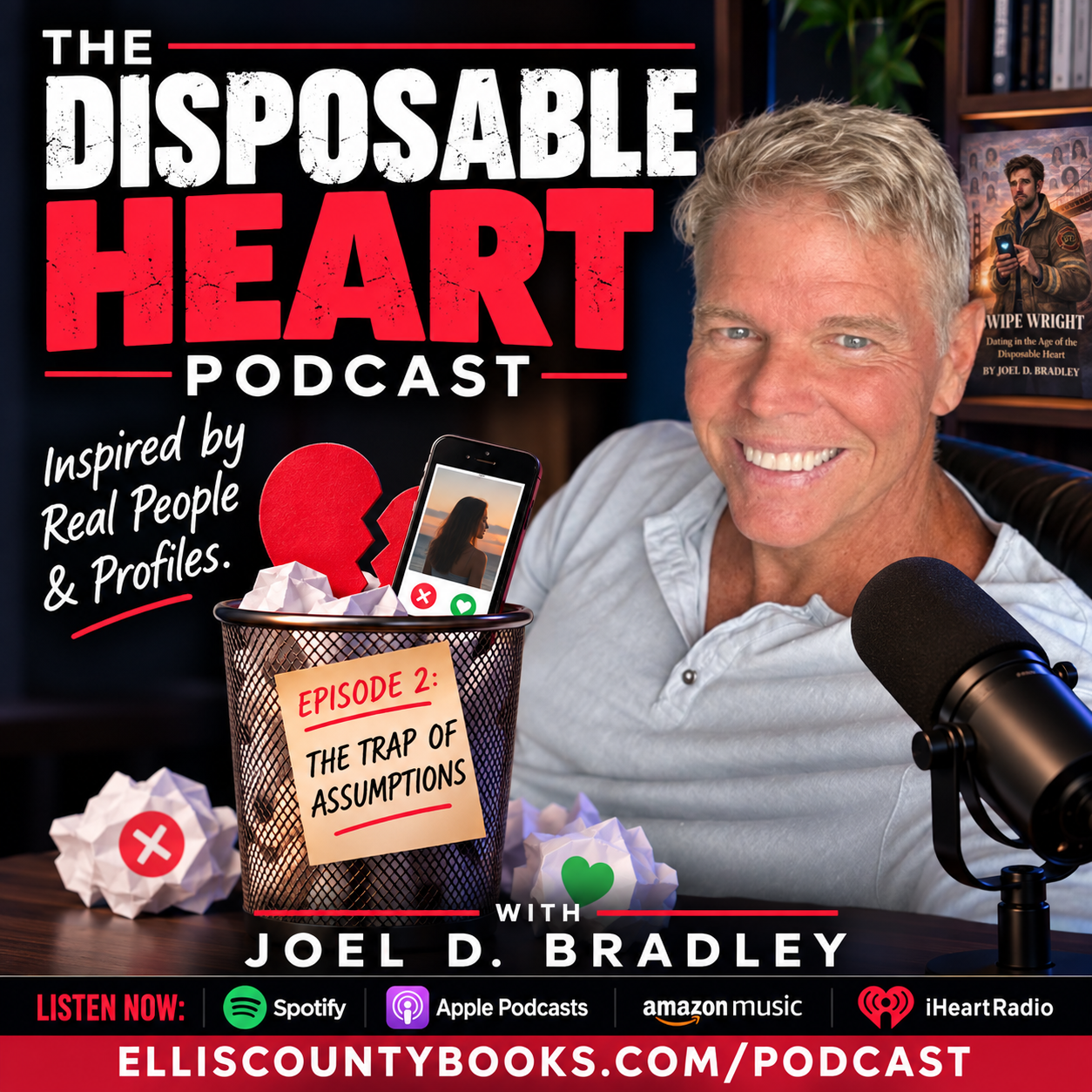
The Disposable Heart Podcast
Inspired by real people & profiles
Real experiences. Fictional or composite voices. Very real questions.
What is all this swiping actually doing to us?
Born from the questions behind Swipe Wright: Dating in the Age of the Disposable Heart, The Disposable Heart Podcast explores the everyday experiences behind dating profiles—the awkward, revealing, funny and deeply human moments that rarely fit inside a bio.
Inspired by real dating profiles and real experiences—but presented through fictionalized and composite voices—the show looks beyond the profile pictures and asks what modern dating is doing to the way we see one another.
Hosted by author Joel D. Bradley, creator of Swipe Wright.
Profiles serve as anonymized inspiration for fictional or composite characters and themes. The point isn’t to expose people. It’s to understand the culture we’re all helping create.
Some episodes may use fictional or composite characters and AI-generated voices in presenting these stories.
About the show
Behind the Swipe
Online dating gives us more choices than any generation in history.
But has having more choices made it easier to connect—or easier to discard one another?
Each episode of The Disposable Heart Podcast takes an idea inspired by modern dating profiles and lets everyday men and women tell their side of the story.
No dating coaches.
No influencers promising seven steps to finding your soulmate.
Just people trying to make a connection in a world where everyone appears to have another option waiting one swipe away.
Now playing
Episode 5
The Second Date: When Attraction Meets Reality
New episodes as they arrive. Available on Spotify, Apple Podcasts, Amazon Music, and iHeartRadio.
Episode 05
The Second Date: When Attraction Meets Reality
19 min 53 sec · October 13, 2026
The first date is an audition. The second date is where things get interesting. Why do some promising first dates lead nowhere, while others reveal unexpected possibilities? In Episode 5 of The Disposable Heart Podcast, author Joel D. Bradley explores the psychology of second dates, attraction, and the expectations we bring to modern relationships. Two contrasting stories reveal different sides of the dating experience. Olivia meets a handsome, charming man whose second date exposes some troubling character traits. David nearly dismisses a woman after an ordinary first encounter, only to discover that attraction sometimes develops when we give someone another opportunity. Along the way, Joel discusses research into online dating and introduces listeners to Frank Wright’s adventures in his satirical novel, Swipe Wright: Dating in the Age of the Disposable Heart. Sometimes the second date reveals a warning light. Other times, it reveals a porch light.
Listen to Episode 5Episode 04
Red Flags, Green Lights & The Spark
What are we really evaluating on a first date? In Episode 4, Joel moves beyond profiles and swiping and into the actual date—where red flags, green lights, attraction, and “the spark” can distort what we see. One woman describes a perfectly good date that left her feeling nothing. One man describes a date filled with warning signs that he calls the best he’s had in years. And Joel shares a first-date story involving a bucket of popcorn, a smuggled box of wine, and one very important popcorn-to-wine ratio. Are we recognizing genuine compatibility—or have we become addicted to emotional stimulation? Inspired by real people, profiles, and experiences.
Listen to Episode 4Episode 03
Baggage
14 min · September 20, 2026
Everyone says they want “no drama.” But is drama the same thing as baggage? Joel explores the baggage we carry into relationships through Cindy and Ken—two people with very different ideas about what we're willing to carry for someone else. And yes, Jerry Springer makes an appearance.
Listen to Episode 3Episode 02
The Trap of Assumptions
How quickly do we decide who someone is from a handful of dating-profile photos? Episode 2 explores the assumptions we make before a conversation ever begins—and what those snap judgments may reveal about dating in the swipe-right world.
Listen to Episode 2
The novel
Where It Started
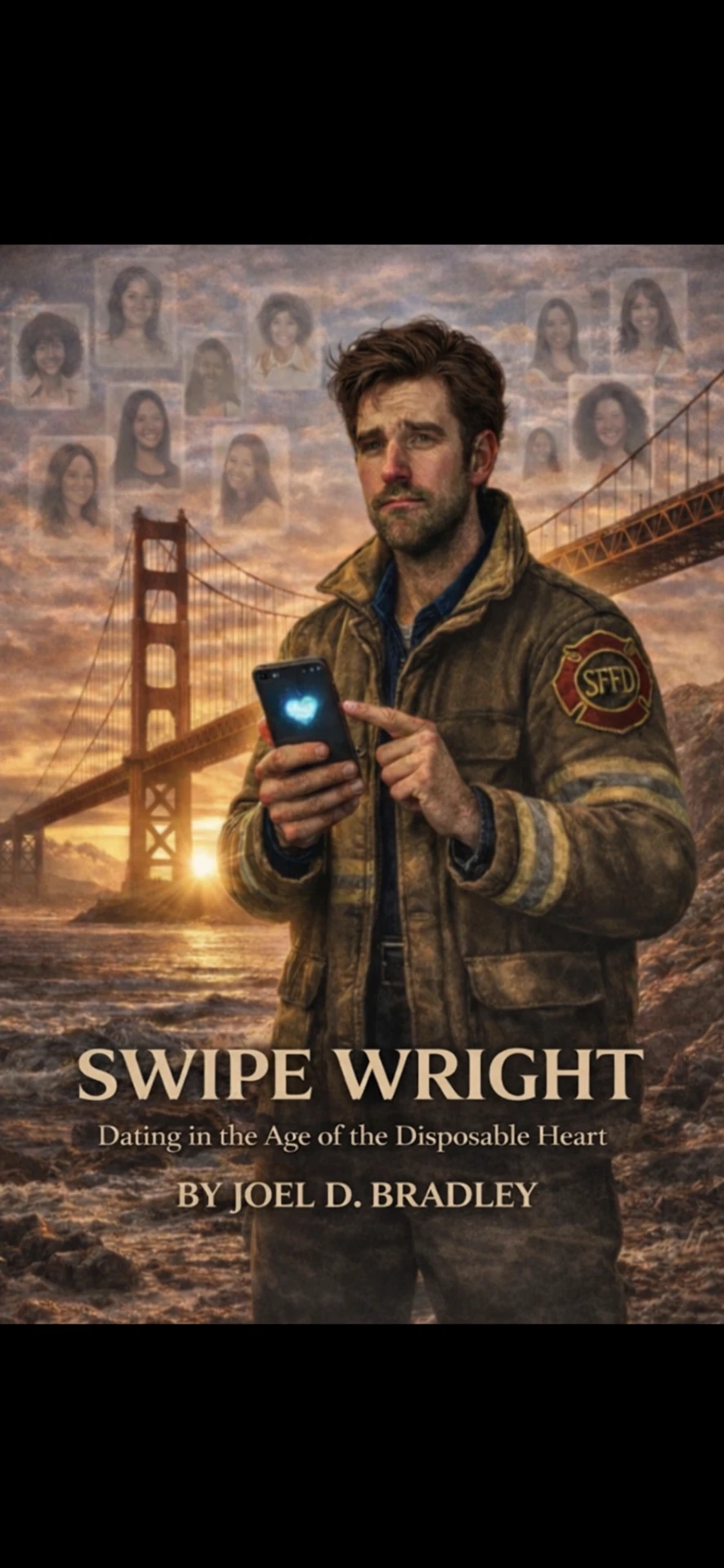
The Disposable Heart Podcast grew out of the questions behind Joel D. Bradley's novel Swipe Wright: Dating in the Age of the Disposable Heart.
The novel uses satire to explore a dating culture increasingly shaped by apps, algorithms, curated identities, endless options, and the belief that somebody better may always be one swipe away.
The Disposable Heart Podcast continues the conversation that began with Swipe Wright: Dating in the Age of the Disposable Heart.
Discover Swipe Wright
Your host
Joel D. Bradley
Joel D. Bradley is an author, former Baltimore Orioles international scout, entrepreneur, and publisher whose work explores the intersection of technology and human behavior.
His books include Swipe Wright, Death By Data, and The 7-Player Baseball Revolution. Through The Disposable Heart Podcast, Bradley turns his attention to modern relationships and asks the same question that runs through much of his work:
When technology promises to make life better, what happens to the human experience along the way?